
Endoscopic Retrograde Cholangiopancreatography (ERCP)
What is an endoscopic retrograde cholangiopancreatography (ERCP)?
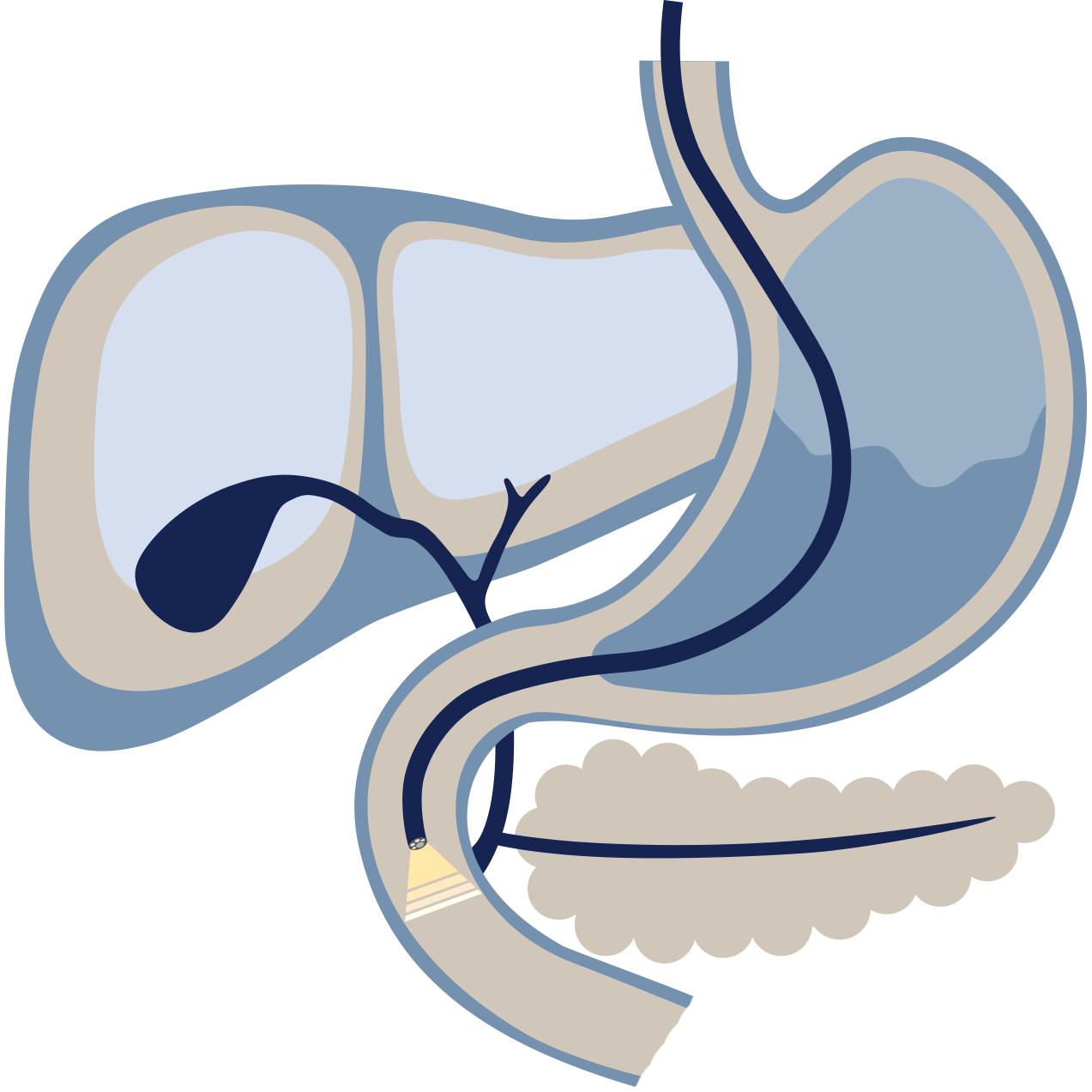
ERCP is a highly specialised endoscopic procedure used to diagnose and treat problems of the bile ducts, gallbladder, and pancreatic duct. These ducts drain the liver, gallbladder, and pancreas.
It combines the use of a specialised side-viewing endoscope (duodenoscope) with X-ray imaging. The endoscope is passed through the stomach into the duodenum. Instruments can be passed through the endoscope into bile duct or pancreatic duct, allowing for assessment and treatment of various conditions.
Why might you need an ERCP?
ERCP is primarily a therapeutic procedure performed to treat blockages or abnormalities within the bile and pancreatic ducts.Reasons for ERCP include:
Removal of gallstones: Extracting stones that have passed from the gallbladder and become lodged in the bile duct (choledocholithiasis).
Stent insertion: Placing a small plastic or metal tube (stent) across a narrowing (stricture) or obstruction to restore bile flow, often due to cancer or inflammatory conditions
Diagnosis and biopsy: Collecting brushings or biopsies from suspicious strictures within the ducts.
Sphincterotomy: Cutting the muscle valve (sphincter) that guards the duct opening to facilitate stone removal or improve drainage.
Treating biliary infections: Draining an obstructed bile duct to relieve cholangitis (a severe infection).
Preparing for your ERCP
Fasting: You must not eat or drink anything (including water) for a specified period, typically 6 hours prior to the procedure.
Medication: Blood-thinning medications (e.g., aspirin, warfarin, apixaban) often need to be stopped several days prior, as there is a risk of bleeding, especially with stone removal or stent placement. Specific instructions will be given by Dr Selvanderan.
What to expect?
ERCP is a procedure performed by Dr Selvanderan with an anaesthetist in a specialised endoscopy suite or operating theatre, as it involves fluoroscopy (X-rays). The procedure typically takes 30-60 minutes.
Sedation: You will receive deep intravenous sedation or a general anaesthetic to ensure you are completely comfortable and still.
During the procedure: You will lie on your stomach in what is known as a swimmer’s position. The endoscope is passed through your mouth, stomach, and into the duodenum. The relevant duct is cannulated with a special catheter, contrast is injected under X-ray guidance, and appropriate therapeutic interventions (e.g., stone removal, stenting) are performed.
Your Recovery
Although ERCP is more involved than a standard gastroscopy or colonoscopy, it is generally performed as a day procedure.
Discharge: You will usually be ready to go home within 1-2 hours after the procedure.
Post-sedation: You must not drive or operate machinery for the rest of the day. A responsible adult must escort you home and stay with you.
Results: Dr Selvanderan will discuss the findings and outcome of the procedure with you on the day, and a report will be sent to the referring doctor.
Risks
ERCP is an advanced procedure with a higher risk profile than routine endoscopy. Dr Selvanderan will discuss the nature and risks of the procedure with you in detail. Potential risks include:
Pancreatitis: Inflammation of the pancreas is the most common and significant risk (risk is typically 2-5%).
Bleeding: Occurs more often after sphincterotomy (cutting the sphincter muscle).
Perforation: A tear in the wall of the duodenum or bile duct (rare).
Infection: Cholangitis (bile duct infection) or cholecystitis (gallbladder infection).
Reaction to sedation/anaesthesia: Risks associated with the sedative medication.
ERCP in expert, safe hands
Dr Shane Selvanderan has undertaken specific Australian and international fellowships at expert ERCP centres, and regular trains fellows in this procedure as part of his public appointment at the Alfred. Where clinically appropriate, he is able to perform ERCP to provide minimally invasive diagnosis and treatment of a wide range of pancreas and bile duct conditions.